
Antibacterial & Anti-Mite
· Product · 4 min read
A natural “protective barrier”, antibacterial and anti-mite textile finishing agent—cleanliness starts from the fibers.
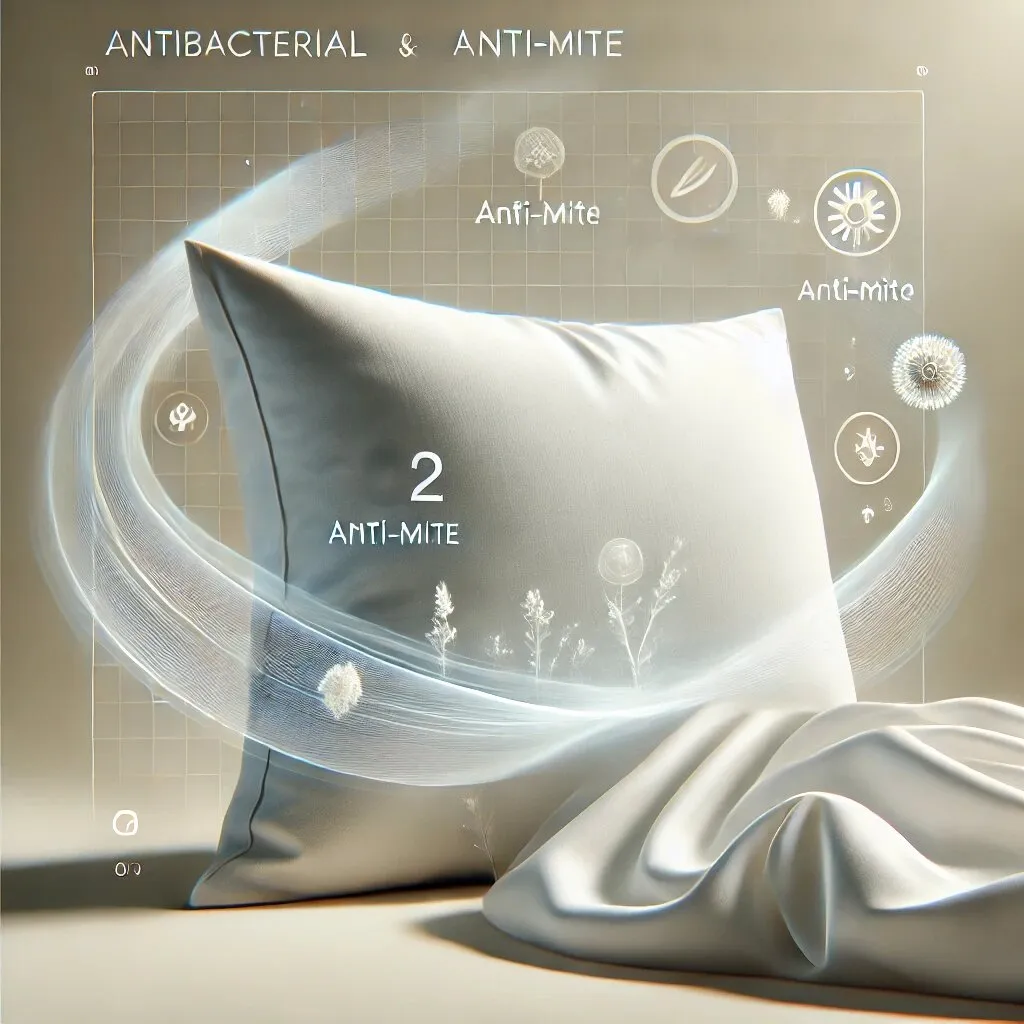
Put an “Invisible Protective Suit” on Textiles—Bacteria and Mites Have Nowhere to Hide
Soft and comfortable textiles—why do they tend to yellow, mold, or even develop odors after being used for a period of time?
The reason is often straightforward: bacterial growth and mite reproduction work together, gradually undermining fabric cleanliness and the overall user experience.
In particular, home textiles that remain in long-term contact with skin—such as bed sheets, pillowcases, and sofa covers—are more likely to become gathering grounds for microorganisms and mites when temperature and humidity conditions are favorable.
Today, by introducing an antibacterial and anti-mite finishing agent during textile production and finishing processes, fabrics can achieve more stable antibacterial and anti-mite performance. This gives textiles a built-in “self-protecting” cleanliness advantage in everyday use, delivering longer-lasting health and comfort benefits.
The following sections provide a structured overview of antibacterial and anti-mite textile finishing agents from three perspectives—basic concepts, technological evolution, and application value: what they are, why they matter, and how they help protect daily life in real-world scenarios.
The History of Antibacterial & Anti-Mite Finishing Agents—From Traditional Natural Wisdom to Modern Technological Advancement
As early as ancient times, people observed that certain natural materials could inhibit microbes, repel insects, and help prevent mites. Examples include:
- Mugwort and camphorwood, which have certain insect- and mite-repelling effects;
- Lye water made from plant ash, used for washing garments, which can provide some antibacterial assistance;
- Sun-drying, relying on ultraviolet light to reduce bacteria and mites—one reason many people still air out bedding today.
While these methods can help under specific conditions, their protective effects often depend on immediate environments and handling practices, making it difficult to form a stable, long-lasting protective function within the textile itself.
Modern Scientific Research—Exploring the Synergistic Mechanism of Antibacterial and Anti-Mite Protection
- The emergence of modern antibacterial and anti-mite technologies
After entering the 20th century, as textile finishing technologies continued to mature1, antibacterial finishing agents and anti-mite finishing agents developed in succession and were gradually applied to products. The industry also formed a clearer functional division:
- Antibacterial finishing focused on inhibiting bacterial growth;
- Anti-mite finishing aimed at suppressing or disrupting mite survival.
- Antibacterial + anti-mite: dual effects in one treatment
In real use environments, bacteria and mites often do not exist in isolation. Instead, they frequently form a mutually reinforcing combination: mite metabolites may provide nutrient sources for bacteria, while bacterial breakdown of sweat, dander, and other organic matter can create more suitable conditions for mite survival2.
For this reason, the combined “antibacterial + anti-mite” function has increasingly become a key direction for functional textiles: a single finishing step delivers dual protection—improving cleanliness while better balancing health benefits and comfort needs.
Future Outlook
Green antibacterial and anti-mite technologies are evolving toward higher overall performance and stronger sustainability attributes, for example:
- Functional integration: combining antibacterial and anti-mite performance with anti-mildew, deodorizing, moisture management, and wicking features;
- Natural and eco-friendly approaches: introducing more bio-based, biodegradable materials and low-burden processes;
- Intelligent regulation: advancing responsive control strategies based on environmental variables such as humidity and temperature;
- Full lifecycle management: making environmental indicators more transparent and traceable from raw materials and production through use and recycling.
Visible cleanliness can be achieved through washing; invisible protection, however, is better established from the fiber level and through finishing processes.
Antibacterial and anti-mite finishing agents build a more robust protective barrier for textiles, allowing cleanliness and peace of mind to accompany everyday use more sustainably.

Antibacterial & Anti-Mite Finishing Agent
Our company’s antibacterial and anti-mite textile finishing agent uses a special organic compound as its core active component. Designed for textile finishing applications, it offers the following features:
- Antibacterial and anti-mite performance verified through relevant standard testing;
- Suitable for a wide range of textiles, including cotton, linen, synthetic fibers, and their blends;
- Eco-friendly and compliant with industry environmental requirements;
- Wash-durable and long-lasting, providing more persistent everyday protection.
We welcome cooperation discussions to jointly develop high-quality functional textiles!

Footnotes
Chen Zheng, Luo Hao, Wu Nan, et al. Research progress on antibacterial and anti-mite agents and their textile manufacturing applications [J]. Dyeing & Finishing, 2023, 49(06):82-86. ↩
Lu Yan. Research and product development of antibacterial and anti-mite multifunctional home textiles [D]. Zhejiang Sci-Tech University, 2011. ↩
![[Invitation] China Nantong International High-End Textile Industry Expo](/_astro/img-0.C--k2R_7.jpg)